




|
Why should people use CFLs?
Switching from traditional light bulbs to CFLs is an effective, accessible change every South Carolinian can make right now to reduce use at home and prevent greenhouse gas emissions that contribute to global climate change. Lighting accounts for close to 20 percent of the average home’s electric bill. Changing to CFLs costs little upfront and provides a quick return on investment.
Do CFLs contain mercury?
CFLs contain a very small amount of mercury sealed within the glass tubing—an average of 5 milligrams, which is roughly equivalent to an amount that would cover the tip of a ball-point pen. No mercury is released when the bulbs are intact or in use. By comparison, older thermometers contain about 500 milligrams of mercury. It would take 100 CFLs to equal that amount. Mercury currently is an essential component of CFLs and is what allows the bulb to be an efficient light source. Many manufacturers have taken significant steps to reduce mercury used in their fluorescent lighting products.
What should I do with a CFL when it burns out?
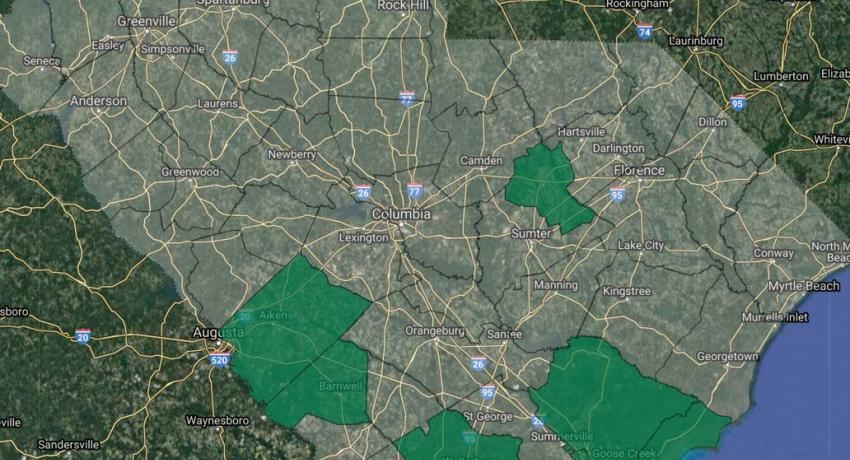
EPA recommends that consumers take advantage of local recycling options for compact fluorescent light bulbs. Barnwell County, Charleston County, Greenville County, York County and the City of Columbia currently have CFL recycling programs, according to Richard Chesley of the S.C. Dept. of Health and Environmental Control. Contact your local municipal solid waste agency directly, call 1-800-CLEAN-UP, or visit DHEC's Web site to identify local recycling options. If recycling is not an option in your area, seal the CFL in two plastic bags and put into the outside trash. CFLs should not be disposed of in an incinerator.
How should I clean up a broken CFL?
If a CFL breaks in your home, open nearby windows and leave the room (restrict access) for at least 15 minutes to disperse any vapor that may escape, carefully sweep up the fragments (do not use your hands) and wipe the area with a disposable paper towel to remove all glass fragments. Do not use a vacuum. Place all fragments and cleaning materials in two sealed plastic bags and put into the outside trash.
Information provided by the US Environmental Protection Agency.
More information on compact fluorescent bulbs.
|